The raging public and political debate about immigration in Britain changes the use and meaning of English words related to immigrants. One of these words is ‘integration’.
The noun integration comes from the verb to integrate, defined by the online dictionary Merriam-Webster in neutral terms as: 1. to form, coordinate, or blend into a functioning or unified whole (unite); and 2. to incorporate into a larger unit or to unite with something else. So, when immigrants integrate they become part of a larger society.
Affective
However, in public debates ‘integration of immigrants’ now also has an affective meaning. It started some time ago. For example, in February 2010 the Conservative Member of Parliament Philip Holobone, said during a Commons debate on Population and Immigration:
If there are a small number of immigrants arriving and spreading themselves out across the country, of course there will be integration. But if there are large numbers of immigrants arriving in a small number of places where they often do not speak English or integrate into the British way of life, there will be huge problems.
Holobone’s choice of words indicates that he feels that immigrants should integrate into British society by learning English and adopting British culture and customs. In other words, they should assimilate or conform.
The shift on what it means for immigrants to integrate is not specifically British. In February 2025 the journalist Rachida Azough wrote in an essay on the ‘integrationparadox’ for the Dutch weekly De Groene Amsterdammer: ‘You [the immigrant] are never “adjusted” enough. Is it not time to bin the term integration?’
Definition
No, we still needs the word. Scientists can formulate and apply neutral, detailed and exact definitions for these ‘slippery’ terms. For example, the historian Leo Lucassen has defined integration broadly
as the general sociological mechanism that describes the way in which all people, migrants as well as non-migrants, find their place in society.
He has modified the initial definition extensively – as a process, where it takes place, its different forms, the changes it brings about (more than one-way) and how it is influenced (The Immigrant Threat: The Integration of Old and New Migrants in Western Europe since 1850, Urbana and Chicago, 2005, pp 18-20).
Process
In my work I use a similar definition as Lucassen. I define integration of immigrants and their descendants as a process through which an immigrant group becomes part of a wider society without necessarily losing the group’s original identity and characteristics, and during which the wider society itself undergoes changes by absorbing the immigrants.
The factors that influence such a process include the attitudes and behaviour of the general population towards members of the integrating immigrant group and their repercussions for the behaviour of that group. Different attitudes and behaviour can arise in the general population. And not all members of the integrating group react the same to attitudes and behaviours in the general population. After all, these people are individuals who make their own choices.
Other factors
Integration can also depend on other factors. These encompass the cohesion of the integrating group and the wider society as well as the preparedness and readiness of individual members of the general population and the integrating group to undergo changes. Other factors can include the economic, social, political and cultural developments of the society in which integration takes place. Furthermore, the education of children can help to determine the speed and course of integration. Some of these factors can influence each other, while others occur independently. There can be interaction as well as a lack of contact between the general population and members of the immigrant group. The result is usually a multi-layer, non-linear, long-term and intergenerational process.
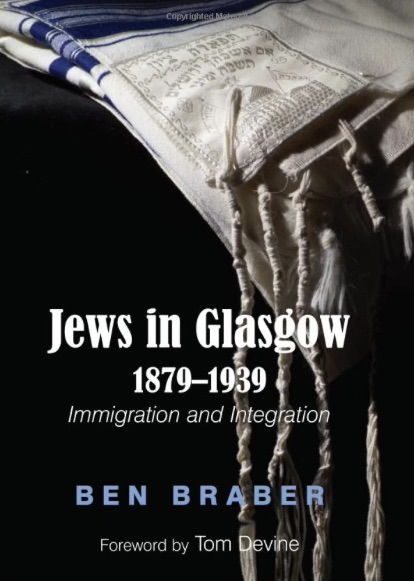
This view dates from 1986 when the historian Maarten Brands and I formulated yardsticks to measure the progress and direction of an integration process for my post-graduate research, leading to my PhD thesis ‘Integration of Jewish Immigrants in Glasgow, 1880-1939’ (University of Glasgow, 1992), which was reworked and published as Jews in Glasgow 1879-1939: Immigration and Integration (London, 2007).
I have further developed our original ideas and utilised integration as a conceptional framework in This Cannot Happen Here: Integration and Jewish resistance in the Netherlands, 1940-1945 (Amsterdam, 2013, pp 8-10).

*
You can find more information about my work here.
Photos on this page by Norma Braber-McKinney.

